It happens every time.
A straightforward safety upgrade is proposed for an outdated stretch of street designed in another era to move large numbers of cars at the expense of people.
A small, vocal group of residents mount a protest, claiming they weren’t consulted; a few businesses assert they’ll be forced to close if the changes go through; and baseless forecasts of increased danger, traffic chaos, and loss of access are shouted at anyone who will listen.
This is all typically couched in a veneer of reasonableness, epitomized by that classic NIMBY mantra: “I support this type of project, just not this particular project.”
The goal of the manufactured uproar is meant to slow, and eventually kill, projects like this. You see it wherever, and whenever, the status quo is challenged.
This time, the target is West 72nd Street.
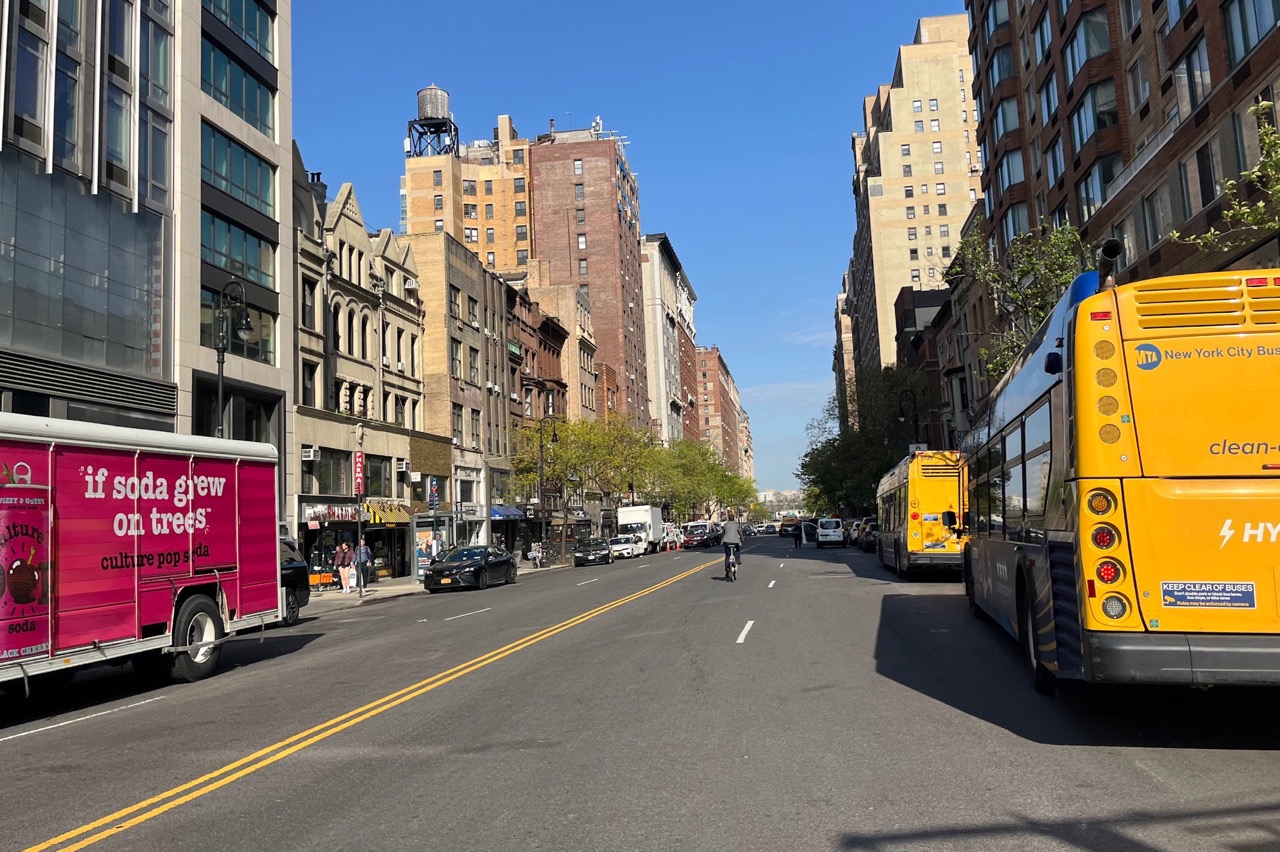
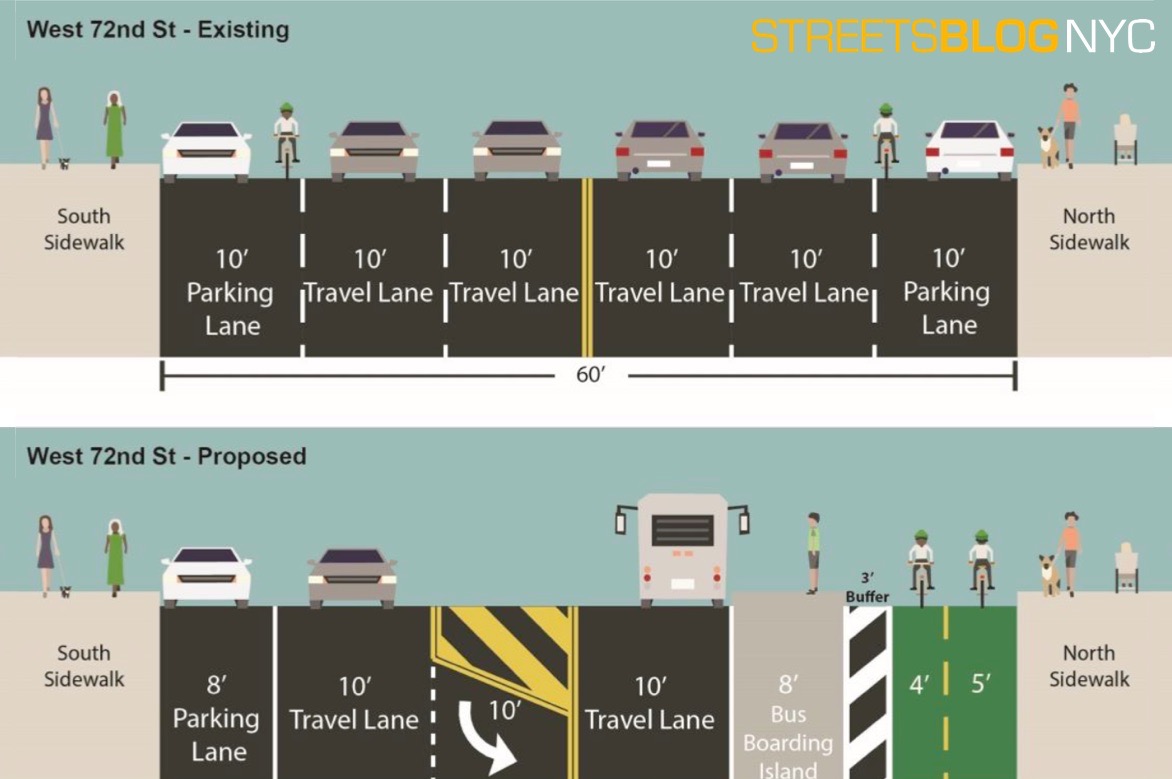
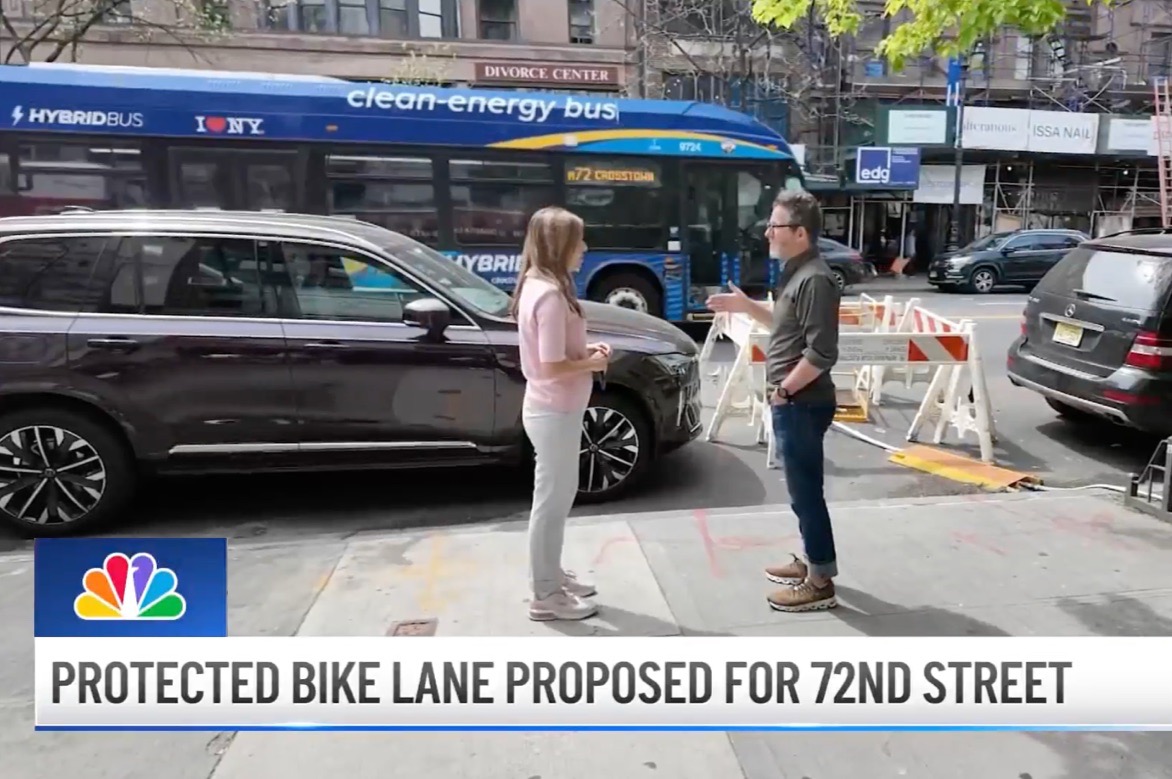
Earlier this month, the NYC Department of Transportation presented a plan to the Community Board 7 Transportation Committee detailing proposed improvements to the corridor that would include pedestrian safety elements, a two-way protected bike lane, and enhancements for bus riders—all on an underutilized four-lane arterial whose most notable features are illegal u-turns and double parking. (The Committee passed a resolution in support of the DOT’s plan, 7-1-1).
The proposed changes are actually pretty modest stuff—the kind of basic upgrades, using off-the-shelf treatments, that should have happened decades ago. But change is change, and the predictable outrage materialized on cue.
The truth is much more mundane: changes like this improve the experience of everyone who uses the street; they create conditions that are good for business; and they provide New Yorkers with options when choosing how to get around.
To put it simply: people-first safety upgrades should happen on every outdated, car-centric street in the city, and should not be up for debate.
Which is why it’s so important that the improvements to West 72nd Street go through. And we need your help to make sure they do.
Here’s how you can pitch in over the next several weeks:
✔️ NOW – Log your support with Community Board 7. Fill out this short form and submit it to the CB7 Transportation Committee saying why you support the proposed bike lane and improvements on West 72nd Street.
✔️ NOW – Email decision makers. Copy/paste your comments from the form above (or write something new) and send an email, with a subject line expressing support for the West 72nd Street redesign, to Council Member Brewer, Community Board 7, and the Department of Transportation at: district6@council.nyc.gov, MN07@cb.nyc.gov, cchattergoon@dot.nyc.gov
✔️ NOW – Call Gale Brewer’s office. Tell the staffer you speak with that you support the proposed changes to West 72nd Street and explain why they are important to you. Before you hang up, ask the staffer if CM Brewer supports these important safety upgrades. Her district office phone number is: (212) 873-0282. (It's okay if you've already called—call again.)
✔️ MAY 2 – Talk to the press. Opponents of the DOT’s proposal are planning a rally this Saturday, May 2 at 10AM at Broadway and 72nd Street. (You heard that right: A rally. To stop a bike lane.) Please drop by if you can and make yourself known to the press and offer to talk about why you support the DOT’s plan. For maximum impact, ride a bike to get there and come with your kids, family, and friends.
✔️ JUNE 2 – Mark your calendar. The most important action to take in the coming weeks will be to testify in support of the DOT’s proposal at the Community Board 7 full board meeting on Tuesday, June 2 at 6:30 PM. We’ll share more details here as they’re available, but make plans now to attend in person. Having supporters in the room will send an unmistakable message that this project is necessary and has broad support.
Every one of these acts matters, so whatever you’re able to do, please do it 🙏 (If you can do them all, even better.)
Once the proposed design for West 72nd Street is installed and people get used to the changes, the opposition will go silent, as it always does, and we'll be one step closer to the livable city we all deserve.
It’s our job now to make sure it happens.